Apr 29, 2020 | 6 minutes
Artículo histórico de Make (la fuente indica el 29 de abril de 2020). Este texto reproduce un artículo de opinión del autor de Make publicado en esa fecha. El «yo», las opiniones y los enlaces citados son del autor en esa fecha; no son una afirmación de este sitio ni una garantía de que las referencias sigan vigentes hoy.
¿Qué papel desempeñará la automatización en nuestras vidas? ¿Desaparecerán los empleos o solo cambiarán? ¿Qué industrias verán más beneficios? Sigue leyendo y descúbrelo.
 Se ha escrito mucho sobre la automatización, pero no puedo evitar sentir que hay un desequilibrio en cómo se ha cubierto el tema en los últimos tiempos.
Siendo uno de los temas más importantes e impactantes de nuestra era, esperaría una serie de puntos de vista diversos en la cobertura. En cambio, a menudo me encuentro con relatos fatalistas sobre cómo la automatización va a quitarnos el trabajo, a hacernos más perezosos o simplemente a dejarnos obsoletos.
Se ha escrito mucho sobre la automatización, pero no puedo evitar sentir que hay un desequilibrio en cómo se ha cubierto el tema en los últimos tiempos.
Siendo uno de los temas más importantes e impactantes de nuestra era, esperaría una serie de puntos de vista diversos en la cobertura. En cambio, a menudo me encuentro con relatos fatalistas sobre cómo la automatización va a quitarnos el trabajo, a hacernos más perezosos o simplemente a dejarnos obsoletos.
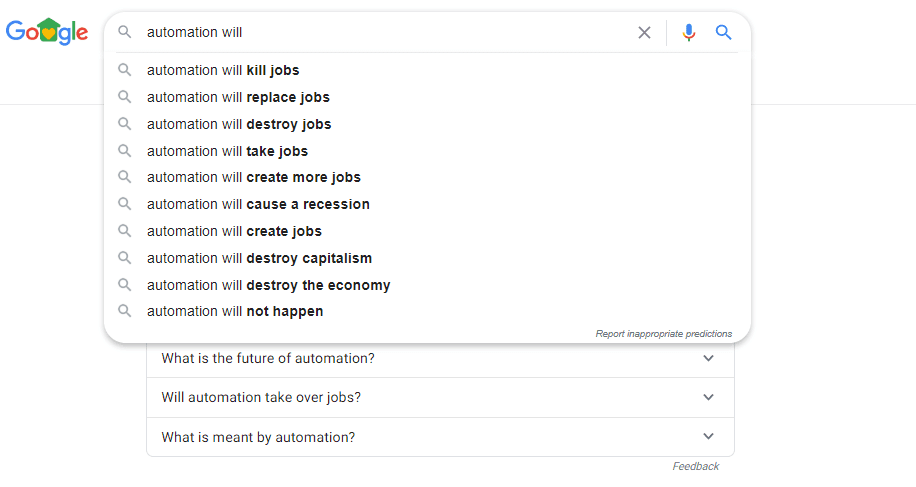 Sinceramente, no estoy aquí para negar ni restar importancia a los escenarios más oscuros que la automatización pueda desencadenar.
Creo que ciertos empleos están en riesgo a causa de la automatización. Y aun así, resulta cansador leer el mismo tipo de historias una y otra vez, todos esos tambores sonando al mismo ritmo por todas partes.
Para ser claros, no me refiero a las formas más amplias de tecnofobia, que llevan existiendo bastante tiempo:
Sinceramente, no estoy aquí para negar ni restar importancia a los escenarios más oscuros que la automatización pueda desencadenar.
Creo que ciertos empleos están en riesgo a causa de la automatización. Y aun así, resulta cansador leer el mismo tipo de historias una y otra vez, todos esos tambores sonando al mismo ritmo por todas partes.
Para ser claros, no me refiero a las formas más amplias de tecnofobia, que llevan existiendo bastante tiempo:
«Lo que has descubierto es una ayuda no para la memoria, sino para la reminiscencia, y das a tus discípulos no la verdad, sino solo la apariencia de la verdad; serán oyentes de muchas cosas y no habrán aprendido nada; parecerán omniscientes y en general no sabrán nada; serán compañía tediosa, teniendo la apariencia de la sabiduría sin su realidad.» Las palabras anteriores no son el relato de un tecnófobo sobre Google o Wikipedia, sino la opinión de Sócrates sobre una de las tecnologías clave de su era: la palabra escrita. Así que olvidémonos de la vieja tecnofobia. Hablo específicamente del miedo a la automatización, que tampoco es exactamente un fenómeno nuevo. Se pueden rastrear libros y artículos que discuten la posibilidad de que la automatización desplace el empleo hasta los años cincuenta, e informes gubernamentales sobre el tema que datan de principios de los sesenta están ampliamente disponibles en línea.
¿A dónde voy con esto? A la cuestión de la perspectiva. Creo que no hay suficientes voces hablando de los muchos beneficios de la automatización y de las ventajas que puede aportar a nuestra forma de trabajar y vivir. Al fin y al cabo, la automatización sigue siendo una pregunta abierta. A diferencia de los temas en los que podemos encontrar suficiente evidencia científica para adoptar una postura claramente definida, no hay mucho consenso sobre el papel que la automatización desempeñará en nuestras vidas. Así que hoy voy a hablar de los beneficios de la automatización. Soy muy consciente de que esto puede leerse en clave de negación, y no pasa nada: efectivamente me disgusta que la distopía sea la narrativa predominante cuando se habla de automatización. Al final, ¿no habrá espacio para un futuro más brillante si hacemos bien la automatización? Eso no es solo lo que creo, sino también aquello por lo que trabajo.
7 beneficios clave de la automatización
Gran parte de lo que se publica sobre la automatización es especulativo. Ahora, echemos un vistazo a los beneficios reales que la automatización está aportando.
1. Mayor productividad y menores costes de producción
Estos dos elementos son los beneficios fundamentales de la automatización, al menos en términos puramente económicos. La mecanización impulsó la primera revolución industrial, y la automatización ha desempeñado un papel importante desde el comienzo de la revolución digital. Considerando todo, es difícil rebatir una producción más rápida, más barata y más consistente. Eso no significa que estemos libres de externalidades negativas y resultados no deseados, pero en innumerables casos una mayor productividad y unos costes menores gracias a la automatización tienen todo el sentido.
2. Asignación inteligente de recursos
La automatización desempeña un papel central en mejorar cómo generamos, procesamos y transportamos recursos clave como la electricidad y el agua. En un mundo donde se desperdician cantidades significativas de agua y energía, soluciones como las redes inteligentes y los sistemas de riego automatizados son vitales para aprovechar al máximo estos y otros recursos. A nivel empresarial, los sistemas ERP son vitales para añadir valor a las compañías haciendo los procesos más eficientes en cada paso. Además, las soluciones de automatización de flujos de trabajo como Make ofrecen una oportunidad para la automatización de tareas, el desarrollo rápido de MVP y la escalabilidad del producto, manteniendo bajos los costes y los tiempos de despliegue.
3. Menor incidencia del error humano
Aunque la automatización no elimina por completo la posibilidad de error humano, sí reduce su incidencia en un margen interesante. Las mayores ganancias parecen estar en la automatización de tareas repetitivas (como la entrada de datos), y también en la automatización de actividades de riesgo como la manufactura y la conducción, donde el 94% de los accidentes mortales ocurren por error humano.
4. Mejor atención sanitaria
La automatización de la atención sanitaria es un campo amplio con muchas verticales en distintas etapas de desarrollo. El descubrimiento de fármacos, la gestión de datos, la automatización de laboratorios y el tratamiento médico son algunos de los campos que muestran los resultados más prometedores. En el caso de la atención sanitaria, el gran debate que se avecina parece ser una continuación del actual. Es decir, está más relacionado con la accesibilidad, la asequibilidad y la calidad de la atención sanitaria que con la intervención humana en los procesos mencionados.
5. Sistemas de logística y transporte más rápidos y seguros
Los sistemas de transporte inteligente combinan
- Registradores automáticos de tráfico
- Sistemas avanzados de comunicación, y
- Vehículos autónomos
para mejorar radicalmente el tiempo de viaje y la distribución de personas y mercancías, respectivamente. En un contexto de urbanización creciente, el big data desempeñará un papel relevante en la reducción de los tiempos de desplazamiento y las congestiones de tráfico, que pasan factura al medio ambiente, la salud y la productividad en general.
6. Mejores sistemas de gestión de residuos
La basura es un problema apremiante que exige soluciones urgentes. ¿Recuerdas cuando el debate giraba en torno a mandar la basura al espacio? En retrospectiva, suena como una alternativa descabellada comparada con lo que la automatización puede hacer por nuestros residuos. La automatización mejorará la recogida, el transporte y el procesamiento de la basura, acercándonos a una forma de vida más sostenible. Ya están ocurriendo avances interesantes con las plantas automatizadas de valorización energética, los sistemas neumáticos de recogida de basura y las plantas de clasificación de residuos asistidas por tecnología de visión por computadora. Aunque la automatización sin duda nos ayudará con los residuos, esto no debería impedirnos ser más conscientes de nuestros hábitos de consumo. Si te interesa, te recomiendo echar un vistazo a las siguientes comunidades:
7. Suavizar el impacto de una fuerza laboral menguante
Una de las generaciones más prolíficas del siglo pasado —los boomers— se está jubilando a ritmos impresionantes. Este evento en curso está teniendo un impacto tremendo en la participación de la fuerza laboral. Muchos de los sistemas que hemos construido en torno a una fuerza laboral fuerte —como la sanidad, la educación y prácticamente cualquier programa gubernamental que se te ocurra— están bajo niveles crecientes de estrés. La automatización puede ayudarnos a cerrar la brecha de productividad, reemplazando efectivamente la producción perdida. Sin embargo, los robots no pagan impuestos como los trabajadores; en consecuencia, muchos sistemas siguen en riesgo. Es un debate importante, y espero que aparezca en portadas más a menudo a medida que los boomers sigan jubilándose y los robots se vuelvan más comunes.
Los beneficios menos obvios de la automatización
En la ambientación futurista de la ya clásica película de Pixar Wall-E, la automatización y el consumismo han convertido a los humanos en seres sin huesos ni mente.
Los robots lo hacen todo por ellos, resultando en una distopía donde la población simplemente va a la deriva por el espacio, adormecida por el entretenimiento constante y la comida rápida. La ambición, la agencia y el compañerismo —entre otros rasgos que consideramos fundamentalmente «humanos»— no se ven por ninguna parte.
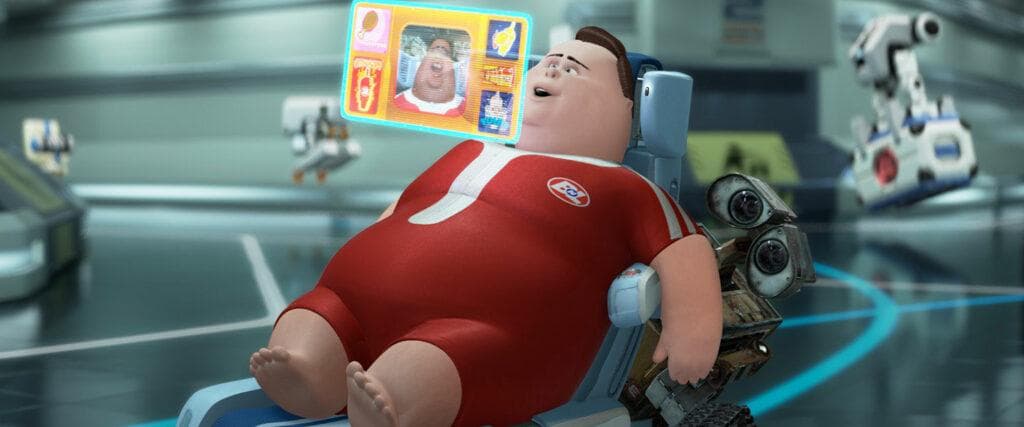 Licencias artísticas aparte, Wall-E hizo un trabajo tremendo retratando nuestra mayor ansiedad sobre la automatización: que nos volverá redundantes. ¿Pero es verdad? ¿Nos llevará la automatización a un futuro donde la actividad humana deje de tener sentido?
Conclusión: tenemos que hablar de la automatización
Los procesos de negocio, la sanidad y el transporte son un juego fácil a la hora de argumentar a favor de la automatización. No obstante, me interesan menos los beneficios obvios que las discusiones que el tema debería__suscitar , y cómo estas se desarrollarán entre gobiernos, ONG, grupos civiles, empresas, familias y grupos de amigos. Creo que es aquí donde están los beneficios menos obvios de la automatización: en las discusiones sobre el tema. Serán instrumentales en lo que hagamos de la automatización como conjunto, cómo la adoptemos y para qué. Algunas de las preguntas que nunca dejan de despertar mi interés incluyen:
- ¿Cuál es el significado del trabajo en la era de la automatización?
- ¿Cuál es el verdadero valor de las actividades más difíciles de automatizar, como las artes creativas? ¿Cómo deberíamos recompensarlas y fomentarlas?
- ¿Cómo reinventaremos sistemas heredados como la educación o conceptos como el tiempo libre y los ingresos en un mundo ampliamente automatizado?
Hemos llegado a ver el trabajo transaccional (y la educación, hasta cierto punto) como algo natural. El problema es que la automatización está cambiando esto al sacarnos de la transacción. Si nos quedamos con esa visión del trabajo, el desempleo y la falta de propósito pueden convertirse fácilmente en nuestro futuro; si no, un nuevo mundo de posibilidades se abrirá ante nuestros ojos.